



HOT NEWS
In emergency medicine, every diagnostic decision you make is closely tied to time, accuracy, and resource availability. As patient volumes rise and emergency workflows become more complex, handheld ultrasound has moved from an optional tool to a practical diagnostic solution across emergency departments, pre-hospital care, and mobile medical settings. For procurement managers, distributors, and healthcare system decision-makers, understanding how handheld ultrasound performs in real emergency scenarios is essential before making long-term purchasing decisions.
Emergency medicine operates under constant pressure. You face unpredictable patient inflow, limited space, and the need for immediate clinical answers. Traditional cart-based ultrasound systems often fail to meet these operational realities due to size, shared usage, and fixed locations.
Handheld ultrasound addresses these constraints by allowing you to bring imaging directly to the patient. In emergency medicine, this shift toward point-of-care ultrasound reduces reliance on centralized imaging departments and minimizes delays caused by equipment availability. Whether in trauma bays, resuscitation rooms, ambulances, or temporary emergency facilities, handheld ultrasound supports faster decision-making without disrupting existing workflows.
From a procurement perspective, this growing demand is not driven by trend alone. It reflects structural changes in emergency care models that prioritize decentralized diagnostics, portability, and rapid bedside assessment.
When seconds matter, diagnostic speed becomes a measurable outcome. Handheld ultrasound allows you to perform immediate bedside imaging without waiting for patient transfer or scheduling. In emergency medicine, this capability directly supports faster triage, earlier intervention, and more confident clinical decisions.
Common emergency applications include FAST examinations for trauma, lung ultrasound for respiratory distress, and focused cardiac assessments during shock or cardiac events. With handheld ultrasound, clinicians can confirm or rule out critical conditions in real time, reducing diagnostic uncertainty at the point of care.
For buyers, this translates into operational value. Faster diagnosis reduces length of stay in emergency departments, improves patient flow, and supports better utilization of clinical staff. These outcomes are particularly relevant when evaluating handheld ultrasound for high-volume emergency settings.
Emergency medicine does not operate in controlled environments. Space constraints, frequent patient movement, and unpredictable conditions require diagnostic equipment that can adapt quickly. Handheld ultrasound is designed for these realities.
Compact size, battery-powered operation, and wireless connectivity allow you to deploy portable ultrasound devices in ambulances, disaster response units, rural clinics, and overcrowded emergency departments. Unlike traditional systems, handheld ultrasound does not require dedicated rooms or fixed installations.
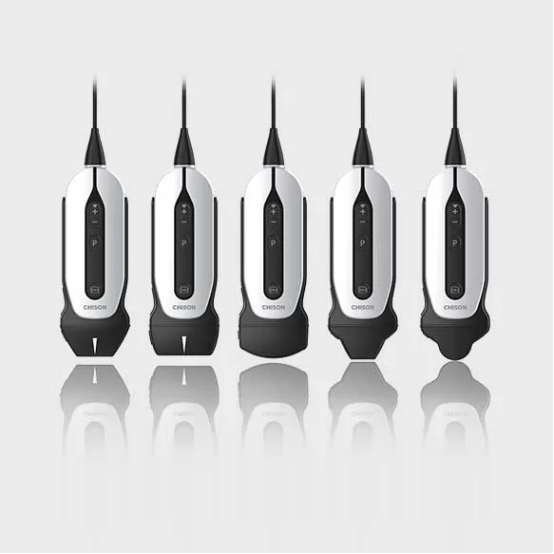
Devices such as the SonoEye series from chison reflect this mobility-focused design. Lightweight construction, smartphone or tablet compatibility, and waterproof standards support consistent use across different emergency scenarios. From procurement planning to field deployment, this mobility reduces logistical complexity and expands imaging coverage.
In emergency medicine, versatility directly affects return on investment. A handheld ultrasound device that supports multiple clinical applications reduces the need for specialized equipment across departments.
Handheld ultrasound systems are commonly used for:
Trauma and internal bleeding assessment
Cardiac and vascular evaluation
Lung ultrasound for respiratory emergencies
Abdominal and pelvic imaging
Ultrasound-guided emergency procedures
Different probe types further expand these applications. Linear probes such as SonoEye P1 and P2 support vascular, MSK, nerve, and lung imaging. Phased array models like SonoEye P3 are used for cardiac and abdominal assessment. Convex and micro-convex options such as SonoEye P5 and P6 extend coverage to abdominal, OB, GYN, and lung imaging.
For buyers, this multi-application capability means one handheld ultrasound platform can serve multiple emergency roles without additional systems.
Emergency departments operate under continuous throughput pressure. Diagnostic bottlenecks often occur when imaging resources are shared or centralized. Handheld ultrasound reduces these bottlenecks by enabling clinicians to perform imaging at the bedside.
By integrating handheld ultrasound into emergency workflows, you reduce patient transfer time, minimize interruptions, and support faster decision cycles. This efficiency becomes especially valuable during peak hours or mass-casualty events when imaging demand exceeds capacity.
Features such as one-touch operation, simplified user interfaces, and preset emergency protocols—found in systems like chison SonoEye—allow emergency staff to focus on clinical decisions rather than device operation. For procurement teams, workflow efficiency is a measurable benefit that extends beyond clinical performance.
From a purchasing standpoint, handheld ultrasound offers cost advantages that align with emergency medicine budgets. Compared to cart-based ultrasound systems, handheld devices typically involve lower capital expenditure, reduced maintenance costs, and minimal space requirements.
You also gain scalability. Handheld ultrasound can be deployed across multiple emergency units, ambulances, or satellite facilities without significant infrastructure changes. This flexibility supports phased procurement strategies and gradual expansion.
For distributors and healthcare systems operating across multiple regions, handheld ultrasound simplifies logistics while maintaining consistent diagnostic capability.
Adoption speed is a key concern when introducing new diagnostic equipment. Handheld ultrasound devices are increasingly designed for rapid onboarding. Touchscreen interfaces, smartphone-style operation, and predefined presets reduce training time for emergency physicians and paramedics.
Digital connectivity further supports standardization. Image storage, DICOM compatibility, and network transmission allow emergency teams to share findings, support remote consultation, and maintain consistent diagnostic documentation.
With support for multiple languages and configurable workflows, platforms such as chison SonoEye are suitable for international deployment across diverse emergency care systems.

When selecting handheld ultrasound for emergency applications, your evaluation should focus on practical performance rather than marketing specifications. Key factors include image quality under emergency conditions, battery life during continuous use, probe durability, and resistance to frequent disinfection.
Waterproof standards such as IPX7 or IPX67 are particularly relevant in emergency medicine, where equipment must withstand cleaning and sterilization. Compatibility with mobile devices and hospital systems also affects long-term usability.
Choosing a supplier with established R&D capability, regulatory certifications, and global service coverage—such as chison, a diagnostic ultrasound manufacturer with presence in over 100 countries—reduces operational risk after deployment.
Emergency medicine continues to shift toward faster, more decentralized diagnostic models. Handheld ultrasound aligns with this direction by placing imaging directly in your clinicians’ hands, wherever patient care occurs.
For B2B buyers, handheld ultrasound is no longer a supplementary device. It is becoming a core diagnostic component that supports emergency workflows, improves resource utilization, and adapts to diverse clinical environments. As emergency care systems evolve, procurement strategies that prioritize portable ultrasound technology are better positioned to meet both current demands and future challenges.

Contact Us
Copyright © CHISON Medical Technologies Co., Ltd. All Rights Reserved | Privacy and terms of use
Products: Vascular Ultrasound Machine MSK Ultrasound Machine Portable Ultrasound Device Portable Ultrasound Machine for Sale Portable Ultrasound Machines For Pregnancy Handheld Ultrasound For Pregnancy Handheld Veterinary Ultrasound Veterinary Ultrasound Machine Portable Vascular Ultrasound Livestock Ultrasound Machine

CHISON respects your privacy. We use cookies to make our site more personal and enhance your experience. Read our Private Policy to learn more about cookies and how to manage them. You agree to our use of these technologies when you visit our site.
We appreciate your feedback
We sincerely invite you to participate in our survey for helping us to improve our digital market.
*1.How fast does the website load?
*2.Does the products displayed on the website interest you?
*3.How easy is it for you to find the information you need?
4.What information or service do you suggest we can offer?

THANKS
Thank you for sharing your thoughts with us. We’re highly appreciated your every feedback.
Sorry!
THANKS
Thank you for sharing your thoughts with us. We’re highly appreciated your every feedback.
