



HOT NEWS
The distinction is not just size — it is where and how diagnostic imaging gets done. Cart-based machines are built for imaging departments: fixed locations, structured workflows, dedicated operators. Handheld ultrasound devices are built for the opposite — the bedside, the field, the consultation room, wherever a clinical decision needs to happen without moving the patient.
A modern handheld ultrasound scanner typically weighs less than a smartphone, connects wirelessly to a tablet or mobile device via Wi-Fi or Bluetooth, and runs on a rechargeable battery with 2–4 hours of continuous scan time. The probe handles ultrasound transmission and reception; image processing and display run on the companion app. This removes the need for a separate display unit, keyboard, or fixed power connection at the point of use.
| Clinical Setting | Primary Use Cases | Key Device Requirements |
|---|---|---|
| Emergency & Trauma | FAST exam, pneumothorax, pericardial effusion | Fast boot, phased-array or convex probe, rugged housing |
| Rural & Remote Primary Care | Abdominal screening, obstetrics, general imaging | Long battery life, simple interface, offline storage |
| Home Care & Elderly Services | Bladder scan, DVT screening, basic cardiac monitoring | Lightweight, one-hand operation, easy image sharing |
| Military & Disaster Relief | Trauma triage, thoracic evaluation | IP67 rating, drop resistance, low power consumption |
| Sports Medicine & Physiotherapy | Muscle, tendon, and joint assessment | Linear probe, high resolution for superficial structures |
| Interventional Guidance | IV line placement, nerve blocks, joint injections | Needle visualization, real-time imaging stability |
The rural and remote healthcare segment deserves particular attention for distributors covering developing markets. Governments and NGOs running mobile medical programs in Africa, Southeast Asia, and Latin America are among the most active buyers of handheld ultrasound equipment. These programs prioritize reliability over feature depth, and total cost of ownership matters far more than unit price.
Probe frequency range sets the depth and resolution trade-off. Linear probes operate at 5–15 MHz for superficial structures; convex probes at 2–5 MHz for abdominal depth. Confirm probe options cover the clinical mix your buyers need.
Imaging modes define diagnostic range. B-mode is the baseline. Color Flow Mapping and Pulsed Wave Doppler expand into vascular and cardiac use. M-mode is required for certain cardiac assessments. Check which modes are included versus licensed separately — software gating affects long-term cost.
DICOM compliance determines whether images push directly into a hospital PACS system. Without it, manual transfer creates workflow gaps. For acute care or integrated health system procurement, DICOM compatibility is typically non-negotiable.
Physical durability matters for field programs. IP67 covers dust and water ingress; military-grade drop resistance is a separate rating. If your customers are equipping field teams, both belong on your supplier RFQ checklist.
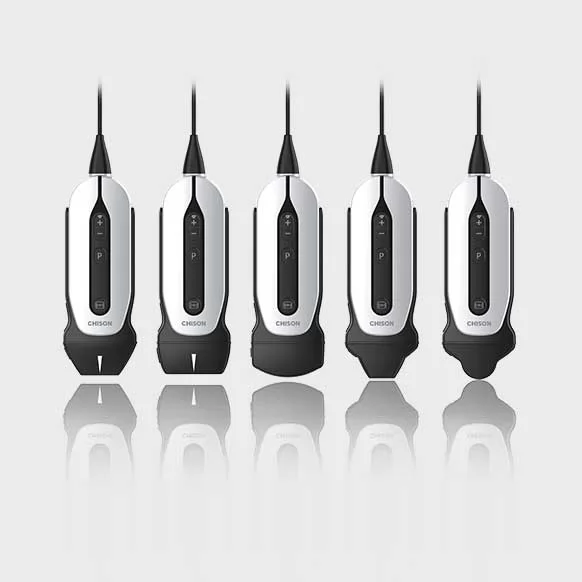
Chison's SonoEye series is a useful reference point for where the handheld category currently stands. Lighter than a smartphone, with military-grade durability and wireless connectivity, SonoEye supports linear, convex, and phased-array probe options — covering emergency care, general imaging, and interventional guidance from a single platform. Chison, founded in 1996 and publicly listed, develops its core ultrasound technology through independent R&D, which directly affects product consistency and OEM customization capability for distributors building private-label programs.

| Cost Component | What to Confirm with Suppliers |
|---|---|
| Probe replacement | Lifespan in scan hours, replacement cost in your region |
| Software licensing | Full feature set included, or imaging modes gated separately? |
| Warranty coverage | Duration, cross-border claims process |
| Training resources | Languages available, online vs. on-site |
| After-sales support | Local service network, response time commitments |
For programs supplying equipment to lower-resource settings, training and after-sales support deserve as much scrutiny as hardware specs. A device field staff cannot effectively operate — or cannot get repaired when it breaks — does not deliver the outcomes that justified the procurement.
| Market | Regulatory Body | Key Requirement |
|---|---|---|
| United States | FDA | 510(k) clearance |
| European Union | EU MDR Notified Bodies | CE marking |
| China | NMPA | Device registration certificate |
| Australia | TGA | ARTG listing |
For OEM or private-label procurement, confirm which approvals the manufacturer holds on the base product and whether those extend to rebranded configurations. IEC 60601-1 electrical safety compliance applies across most markets — request test reports specific to the model configuration you are sourcing, not just the product family.
What is the probe's rated lifespan and replacement cost in your distribution territory?
Which imaging modes are included in the base price versus licensed separately?
What regulatory approvals does the product currently hold, and can you provide certificates?
How are warranty claims processed when the end user is in a different country from the distributor?
Do you support OEM/private-label, and does rebranding affect regulatory clearance status?
What is your lead time for bulk orders and minimum order quantity?
The right device for a municipal emergency department in Europe is not the same as the right device for a rural mobile clinic program in East Africa — even at the same price point. Deployment context determines which specifications actually matter. Define your target use scenario clearly before entering supplier conversations, and request a demonstration unit for clinical testing before committing to volume. Any serious manufacturer should accommodate that without hesitation.

Contact Us
Copyright © CHISON Medical Technologies Co., Ltd. All Rights Reserved | Privacy and terms of use
Products: Vascular Ultrasound Machine MSK Ultrasound Machine Portable Ultrasound Device Portable Ultrasound Machine for Sale Portable Ultrasound Machine For Pregnancy Handheld Ultrasound For Pregnancy Handheld Veterinary Ultrasound Veterinary Ultrasound Machine Portable Vascular Ultrasound Livestock Ultrasound Machine

CHISON respects your privacy. We use cookies to make our site more personal and enhance your experience. Read our Private Policy to learn more about cookies and how to manage them. You agree to our use of these technologies when you visit our site.
We appreciate your feedback
We sincerely invite you to participate in our survey for helping us to improve our digital market.
*1.How fast does the website load?
*2.Does the products displayed on the website interest you?
*3.How easy is it for you to find the information you need?
4.What information or service do you suggest we can offer?

THANKS
Thank you for sharing your thoughts with us. We’re highly appreciated your every feedback.
Sorry!
THANKS
Thank you for sharing your thoughts with us. We’re highly appreciated your every feedback.
