



Blog
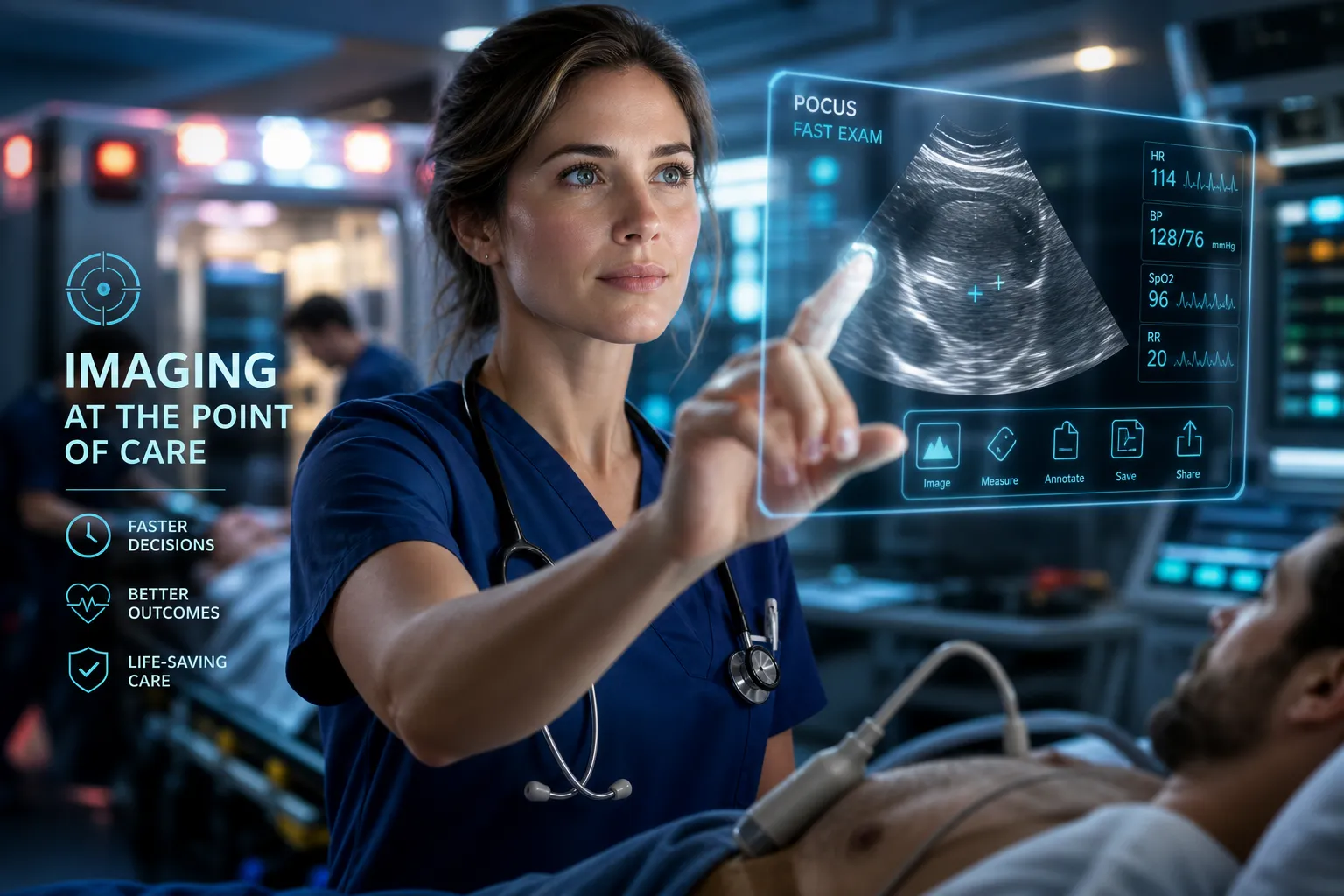
Medical imaging helps clinicians assess patients and plan the next steps in care. In emergency departments, intensive care units, and community clinics, access to imaging at the bedside can be especially valuable. Ultrasound provides real-time images that trained healthcare professionals can use alongside the patient's history, examination, and other test results.
This is the role of point of care ultrasound, commonly called POCUS: a focused examination performed where the patient is receiving care. A handheld ultrasound device can support a targeted assessment, while a portable ultrasound system or cart-based platform may provide additional tools for more detailed examinations.
CHISON has focused on ultrasound technology since 1996. Its handheld, portable, and cart-based systems offer different ways to bring ultrasound imaging into clinical workflows. Choosing between them starts with the examination, the operator, and the care setting.
Ultrasound uses sound waves to produce images, with no ionizing radiation exposure. The FDA's overview of ultrasound imaging describes its use for visualizing internal structures, evaluating blood flow, and guiding procedures. Examinations should be performed by appropriately trained professionals for a medical purpose.
Bedside scanning can provide information without first moving the patient to another department. However, ultrasound, CT, MRI, and X-ray answer different clinical questions. POCUS supports clinical assessment; it does not replace every comprehensive imaging examination or specialist consultation.
Access to equipment is also only part of successful implementation. A 2025 survey of US emergency departments found differences in POCUS use and workflow integration between academic and nonacademic settings. Training, image storage, and review processes therefore deserve attention alongside the choice of machine.
The main types of ultrasound machine differ in size, controls, probe compatibility, and available examination tools. There is no single format that is best for every department.
Cart-based systems can suit departments that need a broad selection of probes, measurement packages, and documentation tools. Their larger workspace can be useful for scheduled examinations and sustained scanning sessions. These systems can also be moved to the bedside when access and space allow.
CHISON SonoMax is a cart-based ultrasound platform for applications including general imaging, cardiology, and OB/GYN. Teams should compare the relevant model and configuration against their examination requirements, rather than assuming that all cart-based systems offer identical capabilities.
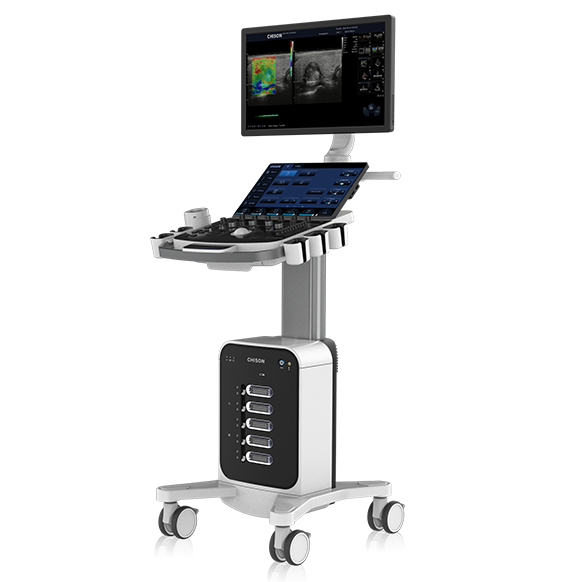
CHISON SonoMax 9 cart-based ultrasound system
A portable ultrasound machine can suit clinicians who move between wards, examination rooms, or outreach locations. When selecting a portable ultrasound system, consider the screen, probe options, scanning modes, battery performance, and the practical demands of carrying and cleaning the equipment.
CHISON SonoAir offers a laptop-style format for mobile clinical workflows. SonoGO portable ultrasound provides another option for teams seeking a portable platform with touch interaction and tools for multiple clinical applications. Available functions depend on the model and configuration.
The most useful portable ultrasound device is one that fits the team's actual examinations and working conditions. A bedside trial can reveal whether the controls, display, and image-saving process work well in the intended setting.
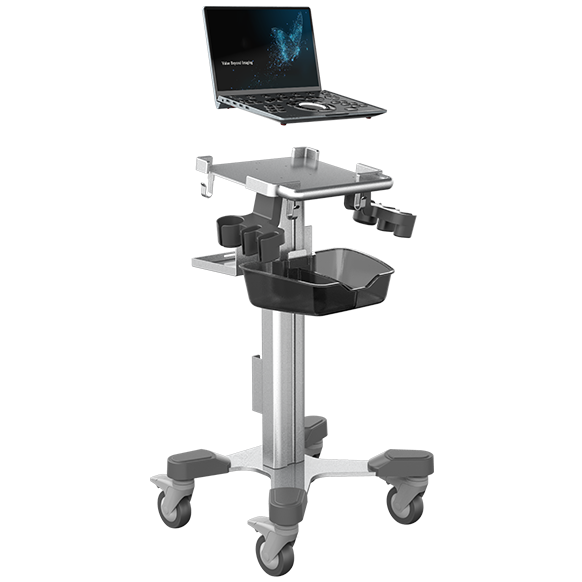
CHISON SonoAir 70 portable ultrasound system, shown on a trolley.
Handheld ultrasound provides a compact format for focused scanning. CHISON's SonoEye handheld ultrasound device is designed for point-of-care use, with different probe options within the series. Teams should verify that the selected probe, compatible display device, and software support their intended applications.
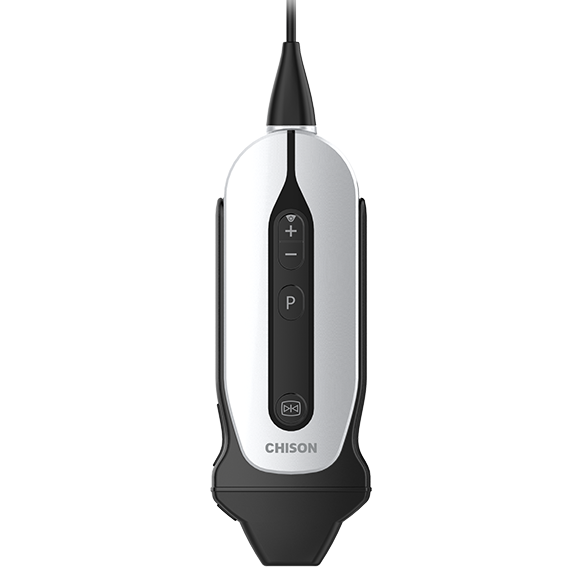
CHISON SonoEye P3 phased-array handheld ultrasound probe.
A 2024 randomized trial comparing a handheld device with a cart-based system reported similar diagnostic accuracy within its study setting. It evaluated selected cardiac, lung, renal, aortic, and biliary examinations. These findings should not be treated as proof that every handheld device matches every cart-based system, or as CHISON-specific clinical evidence.
AI-assisted functions should be evaluated at the level of a specific task, such as measurement or analysis. The practical question is which steps a tool supports on the selected system and what the clinician still needs to review.
CHISON offers SonoAI-assisted functions on selected systems, including the SonoGO series. Buyers should request a demonstration of the functions available for their intended applications and confirm the required probes, software options, and local availability.
AI assistance does not remove the need for training, suitable image acquisition, or clinical judgment. A purchasing evaluation should check whether the output is useful and reviewable in the team's own workflow, rather than assume that AI will automatically improve diagnostic accuracy or reduce patient transfers.
Trained clinicians may use focused ultrasound to look for findings that inform urgent care. For example, the FAST examination assesses selected spaces for free fluid in trauma patients. The ACEP FAST guide explains the examination and its limitations. A negative scan does not exclude all injuries, and further imaging may still be needed.
Bedside ultrasound can help clinicians assess cardiac activity, pericardial fluid, and selected lung findings. Examination scope, operator competence, and image quality matter. The ACEP cardiac ultrasound guide and lung ultrasound guide provide application-specific guidance. Focused examinations complement the wider assessment and may lead to more comprehensive imaging.
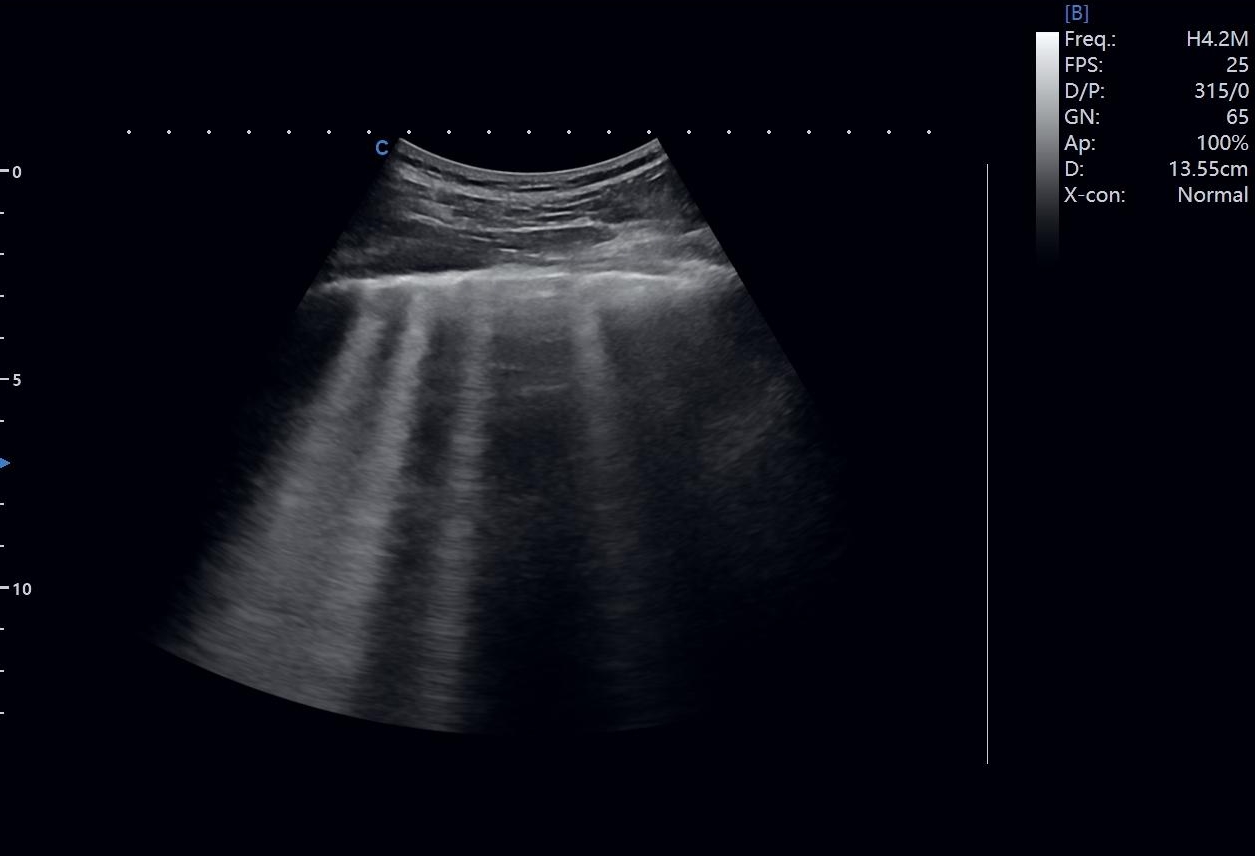
Lung ultrasound image showing multiple B-lines arising from the pleural line.
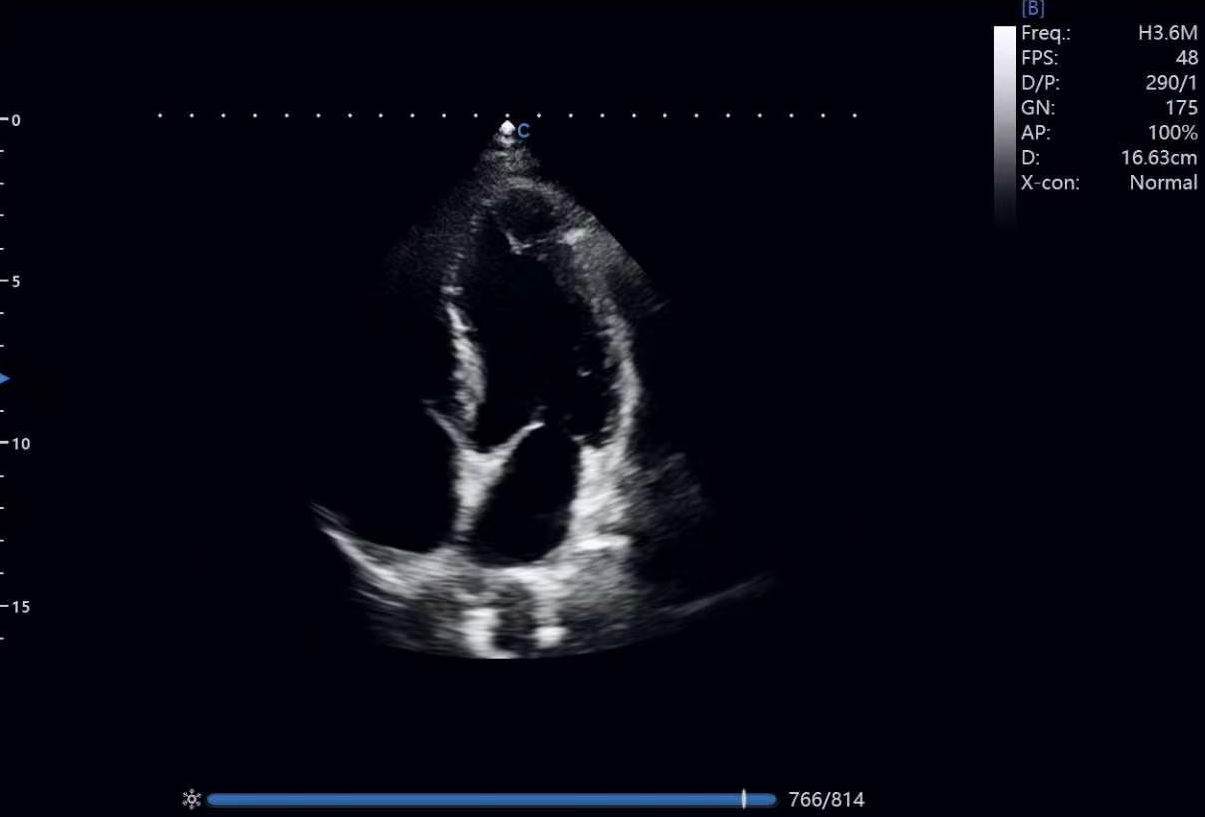
Cardiac ultrasound image acquired with a CHISON ultrasound system
Portable ultrasound equipment can be brought to locations where a dedicated scanning room is unavailable. Teams planning ward-based or outreach services should consider access to power, cleaning supplies, secure image storage, and a pathway for additional investigation or referral. Mobility is useful when it is supported by a clear clinical workflow.
Begin with the clinical questions your team needs to answer. Then evaluate the system against practical requirements:
· Applications and probes: Confirm the examinations, probe types, and scanning modes supported by the selected configuration.
· Image quality and usability: Arrange a demonstration using representative clinical workflows and trained operators.
· Mobility: Assess carrying weight, start-up, battery use, and access around the bedside.
· Documentation and connectivity: Verify image export, reporting, and DICOM/PACS compatibility where required, including any options or integration work.
· Training and service: Review onboarding, ongoing support, warranty terms, and probe replacement arrangements.
· Market availability: Request current documentation for the exact model, configuration, and intended use in the destination country.
Regulatory status should be checked for the product being purchased. A general company statement about international certifications is not a substitute for model-specific documentation.
Pilot the selected equipment before a wider rollout. Track measures such as scan completion, image documentation, user feedback, and time spent on the examination. This gives the team a practical basis for deciding whether the system fits its needs.
Ultrasound imaging supports bedside care when the equipment, clinical application, and operator training work together. Handheld devices, laptop-style systems, and cart-based platforms each have a role, depending on the examination and the workflow.
CHISON offers options across these formats. Contact CHISON to discuss your clinical needs or request a demonstration. Share your country, department, intended applications, and preferred system format so the team can recommend a suitable configuration.

Contact Us
Copyright © CHISON Medical Technologies Co., Ltd. All Rights Reserved | Privacy and terms of use
Products: Vascular Ultrasound Machine MSK Ultrasound Machine Portable Ultrasound Device Portable Ultrasound Machine for Sale Portable Ultrasound Machine For Pregnancy Handheld Ultrasound For Pregnancy Handheld Veterinary Ultrasound Veterinary Ultrasound Machine Portable Vascular Ultrasound Livestock Ultrasound Machine

CHISON respects your privacy. We use cookies to make our site more personal and enhance your experience. Read our Private Policy to learn more about cookies and how to manage them. You agree to our use of these technologies when you visit our site.
We appreciate your feedback
We sincerely invite you to participate in our survey for helping us to improve our digital market.
*1.How fast does the website load?
*2.Does the products displayed on the website interest you?
*3.How easy is it for you to find the information you need?
4.What information or service do you suggest we can offer?

THANKS
Thank you for sharing your thoughts with us. We’re highly appreciated your every feedback.
Sorry!
THANKS
Thank you for sharing your thoughts with us. We’re highly appreciated your every feedback.
